Understanding why exhaustion does not always lead to sleep
Why Can’t I Fall Asleep Even When I’m Tired?
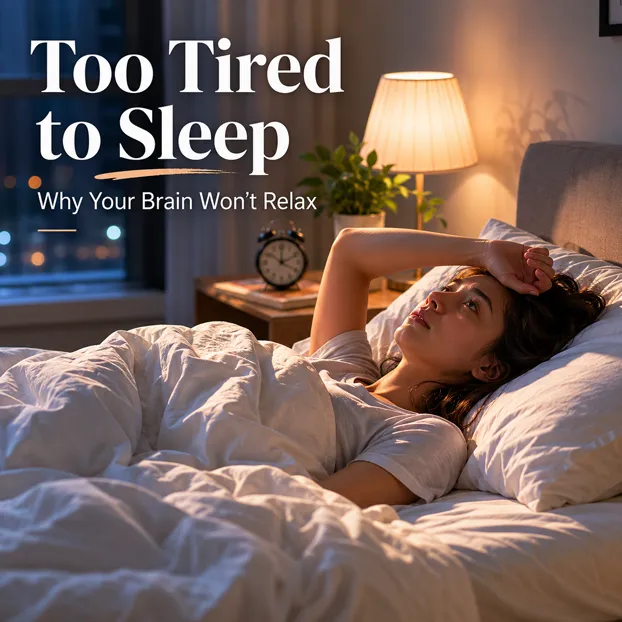
You feel exhausted all day.
Your body is tired.
Your eyes feel heavy.
You finally get into bed expecting to fall asleep quickly.
But suddenly, your mind feels awake.
You toss and turn, unable to drift off — even though you desperately want sleep.
This frustrating experience is more common than many people realize.
Why Being Tired Does Not Always Mean You Can Sleep
Physical tiredness and mental relaxation are not always the same thing.
Your body may need rest, but if your brain remains alert or overstimulated, falling asleep becomes difficult.
Sleep requires both physical fatigue and a calm nervous system.

1. Stress Keeps the Brain Alert
Stress activates your body’s alert system.
Even when you feel exhausted, elevated stress hormones can keep your brain in a “wakeful” state.
This is why many people feel tired yet mentally restless at bedtime.
2. Overthinking Creates Mental Stimulation
Nighttime often becomes the first quiet moment of the day.
Without distractions, thoughts become louder:
- Worries about tomorrow
- Replaying conversations
- Planning future tasks
Mental activity can delay the transition into sleep.
3. Screen Exposure Before Bed
Phones, tablets, and televisions stimulate the brain and expose you to bright light.
This can delay melatonin production and make your body feel less ready for sleep.
Even a short period of screen use before bed may affect sleep onset.
4. Irregular Sleep Schedules
Going to bed at different times each night confuses your internal clock.
Your body struggles to predict when it should prepare for sleep, making it harder to fall asleep consistently.
5. Trying Too Hard to Sleep
Ironically, worrying about sleep often makes sleep more difficult.
When you constantly think:
“Why am I not asleep yet?”
your brain becomes more alert and frustrated.
Sleep works best when it happens naturally, not forcefully.

How to Fall Asleep More Easily
Try creating a calmer transition into bedtime:
- Dim lights before bed
- Reduce screen exposure
- Keep a consistent sleep schedule
- Practice slow breathing or quiet activities
- Avoid checking the clock repeatedly
The goal is to help your nervous system feel safe and relaxed.
Final Thoughts
Feeling tired does not guarantee sleep.
Sleep happens when the body and mind both feel ready to rest.
By reducing stress, calming mental activity, and creating a stable nighttime routine, you can help your body fall asleep more naturally.
Better sleep often begins with a quieter mind.